
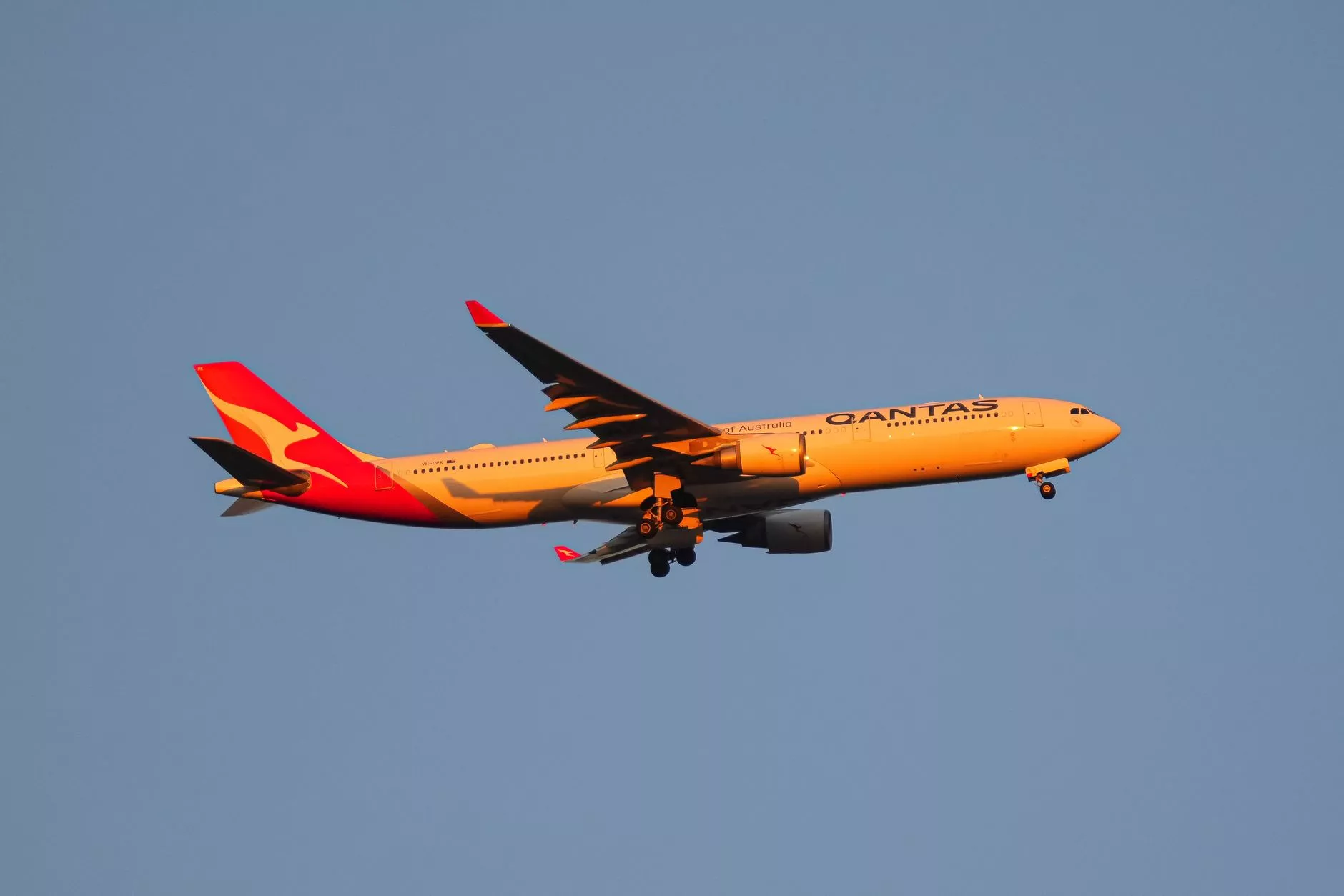
When I think about Qantas, a flood of images comes to mind: the distinctive red tail, the leaping kangaroo, and frankly, a deep sense of national pride. It’s an airline that, for many of us, isn't just a mode of transport; it’s an intrinsic part of Australia’s identity, something we’ve always just *had*. My own earliest memories of air travel are intertwined with the sight and sound of those planes, taking off from Sydney’s bustling airport. You see, the story of Qantas isn’t just a corporate history; it’s a narrative deeply woven into the fabric of a young nation finding its wings, quite literally.
From Outback Origins to Global Icon
Quantas, or Queensland and Northern Territory Aerial Services Limited, started way back in 1920. Can you imagine? Two former World War I pilots, Hudson Fysh and Paul McGinness, along with Fergus McMaster, decided to form an airline in the rugged Queensland outback. Their initial aim was modest: to connect remote communities, perhaps carting mail and a few adventurous passengers. Their first aircraft, a single-engine Avro 504K, hardly hinted at the future giant it would become. It was certainly a far cry from the sophisticated Boeing 787s we see today.
I find it pretty amazing, actually, how quickly they adapted. Early operations involved navigating vast, often unforgiving landscapes, landing on rudimentary airstrips, and overcoming all sorts of logistical challenges. It wasn't luxury travel, not by a long shot. But they established a reputation for reliability and, critically, safety – a core value that, I'd argue, has stuck with the airline throughout its century-plus existence. Their expansion into international services, especially with the 'Kangaroo Route' connecting Australia to England, was a game-changer. It dramatically shortened what was once an arduous sea voyage, bringing the world closer to Australia and vice versa. This wasn't just about business; it was about shrinking distances and forging connections.
Navigating Turbulences: Wars, Recessions, and Innovation
The company hasn't exactly had an easy ride; no major airline ever does. They’ve faced world wars, global recessions, fierce competition, and, of course, industrial disputes. During World War II, for example, their civilian operations were significantly curtailed, with aircraft and personnel often supporting military efforts. It was a tough period, but they came through it, stronger and more determined, I believe.
The post-war era brought the jet age, a truly transformative period for aviation. Qantas didn't just sit back; they embraced it wholeheartedly. The introduction of jet aircraft like the Boeing 707 revolutionized long-haul travel, cutting flight times dramatically and making international journeys more accessible. I remember hearing stories from my grandparents about their first overseas flight on a Qantas jet; it was an experience they described with such awe. The airline, you see, was at the forefront of this technological shift, consistently modernizing its fleet and pushing the boundaries of what was possible in air travel.